
The Dear Memory App: Agentic AI Design
From Concept to Reality: Building a digital memory capsule with Agentic AI, Figma, Bolt, and Google Antigravity.
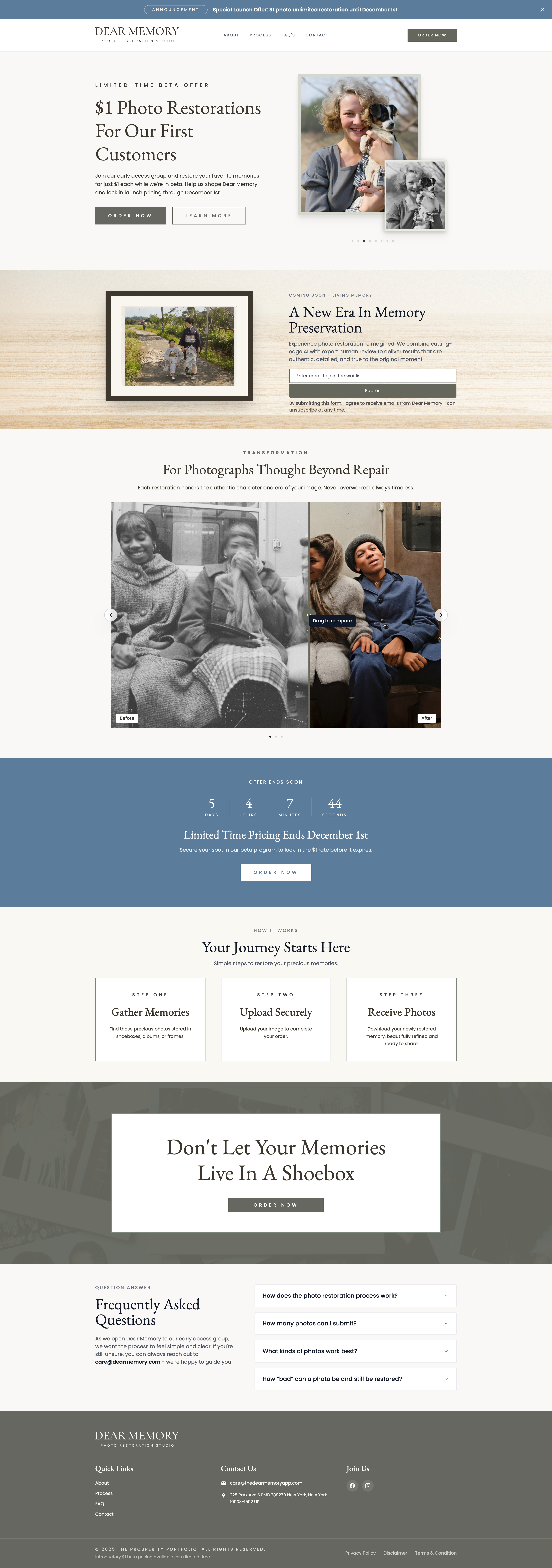
- Project Type
- Mobile Web Application
- Role
- Creator & Lead Developer
- Tools
- Figma, Bolt, Antigravity
- Outcome
- Live Production App
Building The Dear Memory App
How I orchestrated AI agents to deliver a production-grade application.

Designing the Memory Capsule in Figma
The journey began with Agentic Adaptive Design in Figma. I used AI to define the emotional tone and visual language of "The Dear Memory App". The design system was built to be adaptive, ensuring the interface felt personal and intimate across devices. AI helped generate the component variants and accessibility rules needed for a memory-keeping application.

Scaffolding the App with Bolt
With the design locked in, I used Bolt to instantly scaffold the React application. Bolt translated the Figma design tokens into a clean, component-based architecture. This allowed me to focus on the unique "memory capsule" logic rather than boilerplate code, accelerating the initial development phase significantly.
Building the Logic with Google Antigravity
Google Antigravity served as my AI pair programmer for the complex implementation. It helped write the logic for storing and retrieving memories, handling media uploads, and ensuring a smooth user experience. By having access to the full context of the project, Antigravity ensured that the code was not just functional, but aligned with the original design intent.

Launching on Firebase
To bring "The Dear Memory App" to the world, I deployed it using Google Firebase. The integration provided a secure, real-time database for user memories and scalable hosting for the application. This final step completed the agentic workflow, transforming a concept into a live, usable product.
Experience The Dear Memory App
See the result of this agentic workflow in action.